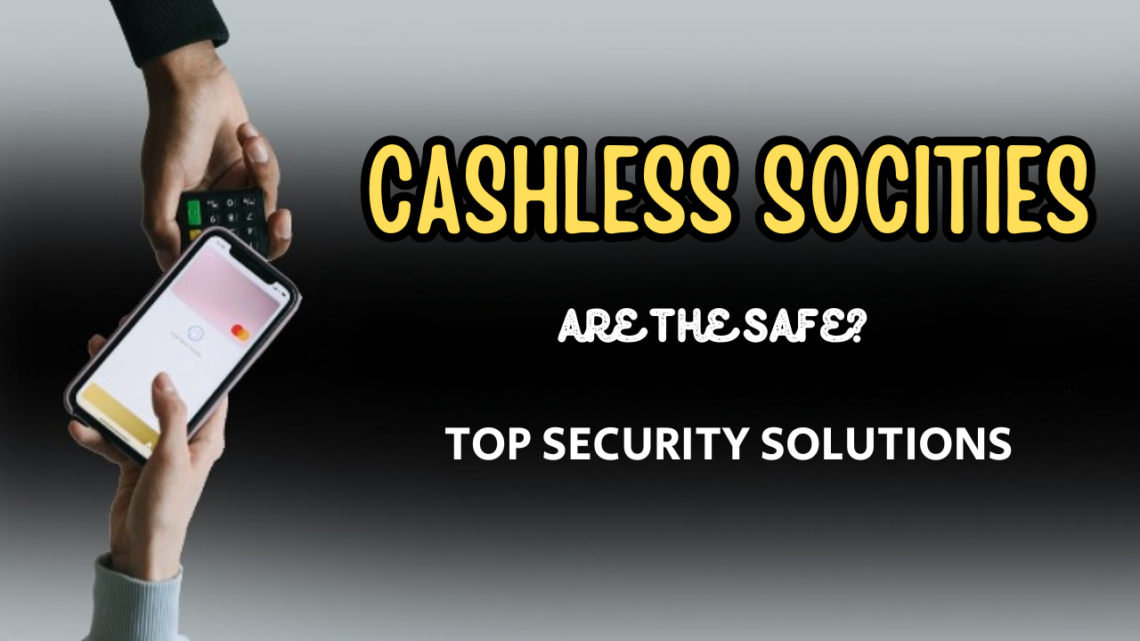
The global transition toward cashless societies is transforming how we interact with money. From digital wallets to contactless payments, the convenience of a cashless system is undeniable. However, as physical cash fades, concerns over security, privacy, and accessibility take center stage. Are cashless societies truly safe, and what security solutions are being developed to address potential risks? This article explores the concept of cashless societies, the associated challenges, and the top security measures ensuring their safety.
The Rise of Cashless Societies:
1. What Is a Cashless Society?
A cashless society is one where cash, coins, and banknotes are fully substituted by digital means of transaction. Payments are done through:
- Digital wallets, including PayPal, Apple Pay, and Google Pay
- Mobile banking applications
- Cryptocurrencies
- Credit and debit cards
Countries like Sweden, South Korea, and China are already adopting cashless economies, where cash is substituted in a huge majority of transactions that are being performed digitally every day.
2. Why Are Cashless Societies Emerging?
There are several reasons why cashless systems are emerging:
- Convenience: Transactions are faster and easier.
- Cost savings: No need to print, distribute, and handle physical cash.
- Transparency: Easier to track transactions, thereby reducing illegal activities.
- Technological advancements: Increasing mobile and internet connectivity supports digital payments.
Security Concerns in Cashless Societies:
Cashless systems have numerous benefits, but they also raise significant risks, including:
1. Cybersecurity Threats:
Users are exposed to the following with reliance on digital platforms:
- Hacking and data breaches: Unauthorized access to personal financial information.
- Phishing attacks: Scams targeting users to steal sensitive information.
- Ransomware: Malicious software that locks users out of their accounts until a ransom is paid.
2. Privacy Issues:
Digital transactions leave a trail, raising concerns about:
- Data surveillance: Governments or corporations monitoring spending habits.
- Loss of anonymity: Unlike cash, digital payments can be traced back to individuals.
3. Digital Exclusion:
Not everyone accesses digital payment systems because of:
- Lack of technological infrastructure.
- Limited digital literacy.
- Economic inequality.
4. Systemic Risks:
A purely cashless system is dependent entirely on digital processes, which stand vulnerable to:
- System outages: Technical issues or cyber hacks.
- Economic vulnerability: System dependency on digital processes may also result in massive fallout during crisis times.
Top Safety Measures for a Cashless Nation:
To respond to these limitations, new sophisticated safety measures have been designed and instituted. Here is the best technology available:
1. Advanced Encryption Technologies:
Encryption ensures that financial data is safe during transactions, making it unreadable to unauthorized parties. Modern encryption methods include:
- End-to-end encryption: Protects data from the sender to the recipient.
- Blockchain technology: Used in cryptocurrencies to secure transactions with decentralized and tamper-proof records.
2. Biometric Authentication:
Biometric methods, such as fingerprint scanning, facial recognition, and iris scanning, enhance security by ensuring only authorized user’s access accounts.
3. Two-Factor Authentication (2FA):
2FA involves two methods of verification, such as:
- Password and a one-time code sent to a phone.
- Biometric login combined with a security PIN.
4. Artificial Intelligence (AI) and Machine Learning:
AI systems can monitor transactions in real time, detecting and preventing fraudulent activities by identifying unusual patterns.
5. Secure Networks:
Public Wi-Fi networks can be a vulnerability. Cashless systems rely on:
- Encrypted connections
- Virtual Private Networks (VPNs) to protect data from unauthorized access.
6. Education and Awareness Campaigns:
Users are essential to safety. Education and awareness campaigns inform users about:
- Detection of phishing
- Protecting the device with passwords and antivirus software
- Avoidance of scams
Advantages of Increased Security in Cashless Economies:
1. Confidence:
Enhanced security measures raise confidence in the digital payment mechanism, thus broadening its acceptance.
2. Reduced Fraud:
New technologies have reduced the avenues for fraudulent actions, thus securing the user as well as the financial institution.
3. Stability in the Economy:
Securing systems reduce interruption due to attacks and ensure sustainable economic activities are undertaken.
4. Accessibility:
A secure system ensures that one extends the gains to the lesser-privileged who face digital exclusion.
Conclusion:
The shift to cashless societies is inevitable, bringing with it a blend of convenience and challenges. While security concerns are valid, advancements in technology provide strong solutions to address these risks. By adopting measures like encryption, biometric authentication, and AI monitoring, cashless systems can become safer and more complete. As we move toward a cashless future, ensuring security and accessibility for everyone should remain a top priority, enabling societies to fully embrace the benefits of digital economies.
FAQs:
1. Are cashless societies safe?
Yes, cashless societies can be safe if robust security measures like encryption, biometrics, and AI monitoring are implemented.
2. What are the main risks of going cashless?
Key risks include cybersecurity threats, privacy concerns, and digital exclusion for those without access to technology.
3. How can I protect myself in a cashless society?
Use strong passwords, enable two-factor authentication, and avoid public Wi-Fi when making financial transactions.
4. What role does AI play in securing cashless transactions?
AI helps detect and prevent fraudulent activities by monitoring transactions in real-time and identifying unusual patterns.
5. How does biometric authentication work?
Biometric authentication uses unique physical traits, like fingerprints or facial features, to verify a user’s identity.
6. What happens during a system outage in a cashless society?
System outages can disrupt transactions, highlighting the need for backup systems and offline payment options.

